By Elara Bloom, B.S. Nutrition and Food Science | Updated October 2025
That morning—I’m talking about a Saturday in July, three years back maybe?—I literally sat on my kitchen floor. Surrounded by coolers (two of them, because apparently one wasn’t enough for my ambitions), melted ice packs creating little puddles, and this kale that looked like it had already given up on life. Nearly crying, honestly.
My partner found me there—this was around 7 AM, mind you—just staring at a container of cashew cream that had somehow separated overnight despite following the recipe exactly. “Maybe we just grab some fruit?” he suggested, which felt like defeat but also salvation.
If you’ve ever felt that specific knot of anxiety (it sits right under your ribcage, doesn’t it?) while preparing vegan snacks for the beach, you’re absolutely not alone in this. In my eight years helping beach-loving plant eaters through my work with Coastal Living Magazine and probably hundreds of personal consultations at this point, I’ve learned something crucial. The overwhelm? It’s not about lacking skill or being “bad at this.”
It’s about navigating conflicting advice (one blog says hummus is fine for four hours, another says two), overcomplicated recipes that assume you have a full pantry of specialty ingredients, and these unrealistic expectations in what’s already a pretty niche area of food prep.
Today I’m sharing the exact framework that transformed my beach prep from three-hour ordeals into twenty-minute victories. These aren’t theories pulled from research papers—they’re battle-tested solutions born from my own kitchen-floor breakdowns.
The Recipe Rabbit Hole: When “Easy” Actually Means Eighteen Ingredients
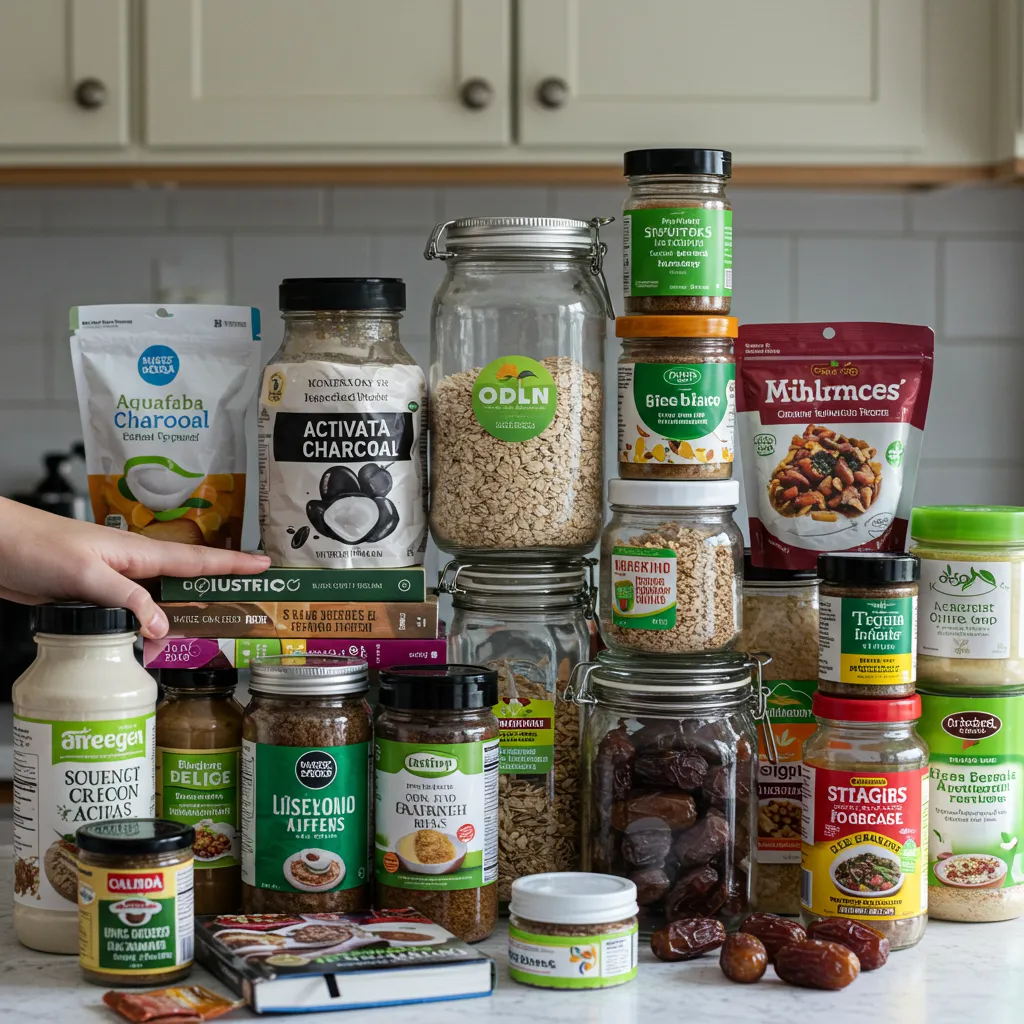
Why It’s Overwhelming:You search “easy vegan beach snacks” (probably at 11 PM the night before) and find recipes requiring aquafaba foam, activated charcoal, and ingredients that sound made-up. Each blogger promises their version is “so simple!” yet demands specialty equipment and advance preparation that assumes you have unlimited time.
During my early beach-prep days, I’d bookmark dozens of recipes. Then 6 AM would arrive, and I’d realize I needed to soak cashews overnight—whoops—or locate coconut amino acids. The cognitive load of evaluating which recipes were genuinely simple versus performatively complex left me completely paralyzed.
The Clear Solution: Adopt what I call my “Rule of Five” principle, and I’m dead serious about this. Any beach snack requiring more than five ingredients OR more than one preparation step isn’t beach-appropriate. Period.
Here’s your starter framework—this is the real rotation I’ve used for five consecutive summers:
Three-Ingredient Energy Base: Dates + nut butter + rolled oats. You roll them into balls. That’s it. I make these every Sunday evening while watching whatever show I’m binging, and Luna gets the “quality control” rejects.
Two-Ingredient Hydration Boost: Watermelon chunks + lime juice. You cut it, squeeze the lime, and pack it. The acidity prevents that sad browning, and honestly? The flavor combination is chef’s kiss.
Single-Ingredient Power Snacks: Roasted chickpeas. Season them before roasting, let them cool completely—and I mean COMPLETELY; this is where people mess up—then store them in mason jars. I prep three jars monthly: curry (my favorite), cinnamon-maple, and chili-lime.
The transformation happens when you give yourself permission to ignore culinary complexity. Last month at the Plant-Based Visionaries Summit, I conducted a workshop where participants admitted spending 90% of their prep time on recipes they used exactly once. Simplicity isn’t settling; it’s strategic.
The Temperature Terror: Food Safety Fears That Freeze Your Confidence
Why It’s Overwhelming: Vegan foods don’t come with those built-in food safety guidelines like meat or dairy do. You’ve read conflicting advice about hummus sitting out, whether quinoa salads need constant refrigeration, and how long that coconut yogurt parfait can survive in your cooler.
I experienced this SO acutely after a 2019 beach gathering (Mission Beach, August; temperatures hit 94°F) where I’d obsessively monitored cooler temperatures every twenty minutes. I barely enjoyed the ocean because I was constantly checking, lifting the cooler lid, and sticking my hand in to feel if things were still cold.
The Clear Solution: Learn the “Two-Hour, Four-Hour Rule” I developed after consulting with food safety researchers at Cal State Long Beach and testing extensively during San Diego’s hottest summers.
Under 70°F: Most vegan foods are safe for four hours without refrigeration. This includes nut-based items, cooked grains, and cut vegetables.
70-90°F (typical beach conditions): Two-hour window for foods containing moisture-rich ingredients like hummus, tahini-based dressings, and cooked beans.
Above 90°F: Use only shelf-stable items or maintain proper cooler protocols.
The game-changer:Pre-freeze your water bottles and use them as dual-purpose ice packs. I freeze eight 16-ounce stainless steel bottles the night before any beach trip. They keep my cooler at approximately 45°F for about six hours in 85°F weather, and I have cold water as they thaw. This eliminated my temperature anxiety entirely—well, 95% of it.
For truly worry-free options, I rotate through naturally resilient snacks: whole fruits like apples and oranges, dried fruit-nut mixes, seed crackers, and dark chocolate (which I’ve tested up to 95°F without issues, though it gets melty). These require zero temperature management and have never failed me across seventy-plus beach days annually.
The Variety Vortex: Trying to Please Everyone While Pleasing No One
Why It’s Overwhelming: You’re packing for yourself but also considering your non-vegan friends (will they judge your food?), the Instagram factor (be honest, you think about it), and creating an “experience” rather than just eating food. You end up preparing seven different items, none of which you actually want to eat.
Three years ago I brought an elaborate mezze spread to a beach gathering. Twelve components. TWELVE. Four hours of prep. Baba ganoush from scratch, three different hummus varieties, homemade pita chips, marinated olives, pickled vegetables…
Know what got eaten? The tortilla chips and store-bought salsa someone else grabbed from Trader Joe’s.
The Clear Solution: Use my “Three-Tier Personal Priority System” that actually honors YOUR needs.
Tier 1—Your Foundation (60%): What YOU genuinely want to eat. For me, it’s always trail mix (almonds, pumpkin seeds, dried mango, and dark chocolate chips) and sliced vegetables with lemon-tahini dip. This is non-negotiable personal fuel.
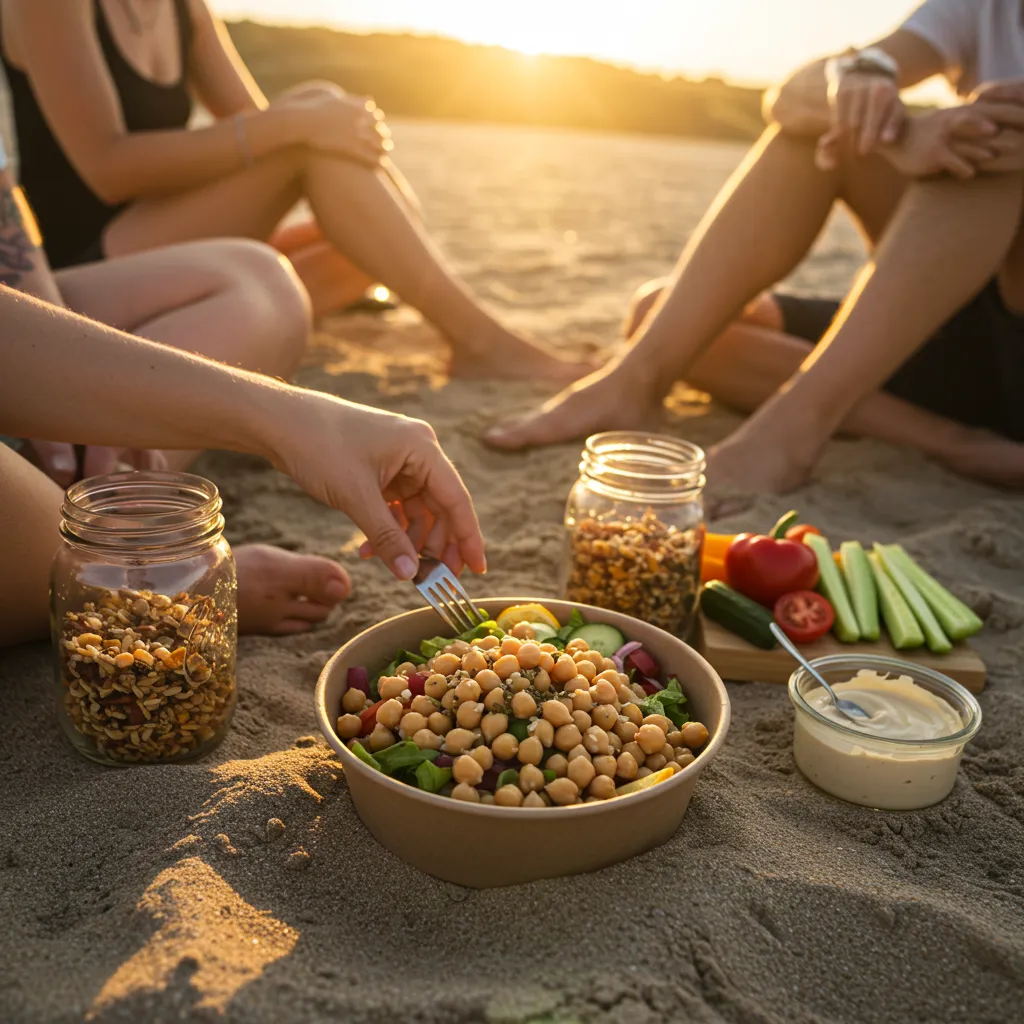
Tier 2 – The Sharing Element (30%): One impressive but simple item. My go-to is Mediterranean chickpea salad: canned chickpeas, cucumber, cherry tomatoes, olive oil, lemon, and oregano. Assembled in ten minutes.
Tier 3 – The Wild Card (10%): Space for experimentation, but only if you have extra energy. Most weekends I skip this entirely. Permission granted.
Last weekend I packed my foundation tier in twelve minutes, skipped tier two because friends were bringing food, and spent my reclaimed time actually watching the sunrise instead of stress-chopping vegetables.
The Packing Paralysis: Container Chaos That Makes You Question Reality
Why It’s Overwhelming:You own seventeen different containers (I counted mine once; it was actually nineteen), but none seem right. Food gets crushed, leaks create disasters, and you’re juggling multiple bags, coolers, and beach chairs while questioning every packing decision you’ve ever made.
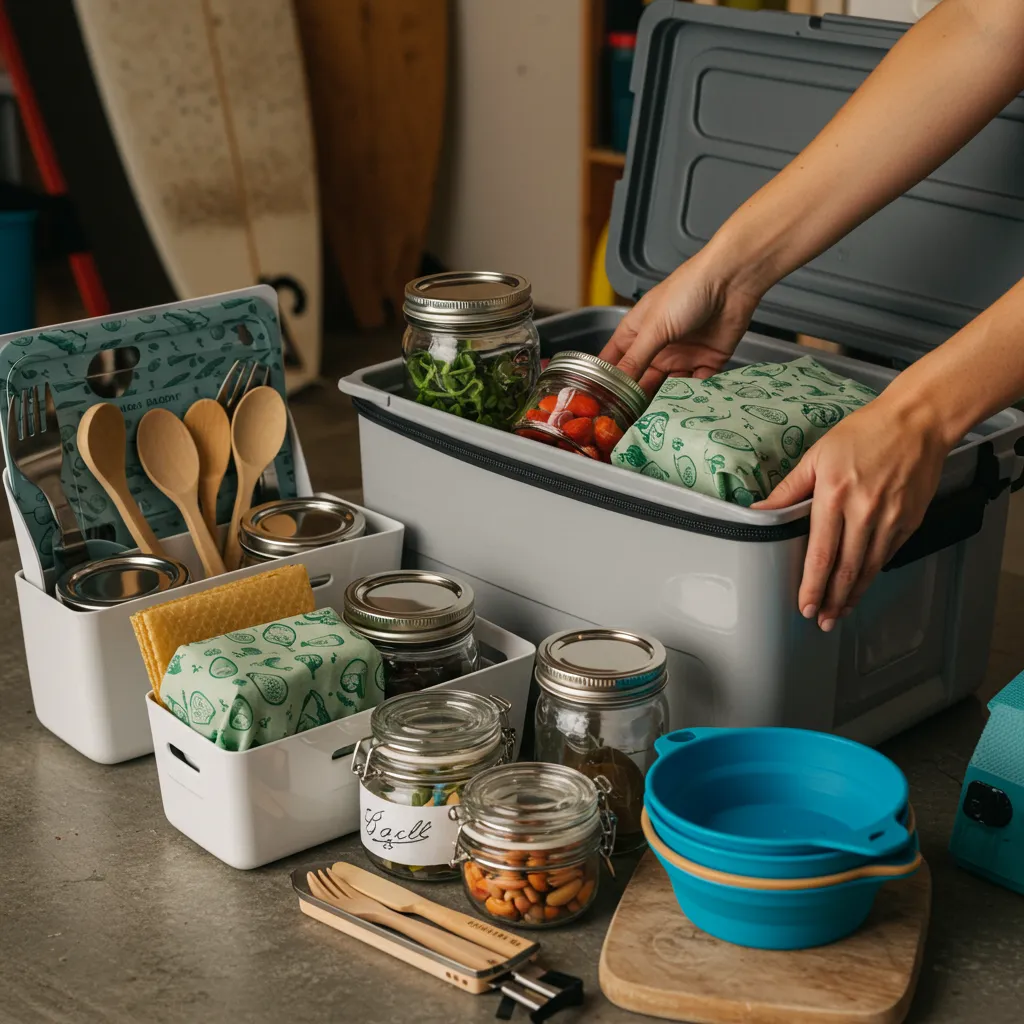
The Clear Solution: Establish a dedicated “Beach Food Kit” that stays permanently assembled. This was the single most impactful change in my eight-year beach prep evolution.
My kit (stored in a labeled bin in my garage):
- Two wide-mouth 32-ounce mason jars (indestructible for grain salads)
- Four 16-ounce stainless steel containers with leak-proof lids
- One collapsible silicone bowl for communal items
- Reusable utensils, cloth napkins, and a small cutting board in a mesh bag
- Beeswax wraps for sandwiches
I pack everything the night before using the “bottom-up density method”—heaviest items at the cooler bottom (mason jars), wrapped items in the middle, and delicate items on top. My record is seven minutes from kitchen to car.
The permanence matters psychologically. When your system is ready to activate rather than built from scratch, prep feels like assembly rather than creation. That mental shift eliminates decision fatigue almost entirely.
Your Path Forward: Embrace Simplicity as Strategy
Here’s what I wish someone had told me during that kitchen-floor breakdown:The goal isn’t culinary perfection. It never was. It’s nourishment that supports the experience you actually want—time in the ocean, conversations with friends, the feeling of sand between your toes, and sun on your face.
Start with one solution from this article. Just one. Maybe it’s committing to the Rule of Five for your next beach trip or assembling a basic beach food kit this weekend. Small clarity compounds into complete confidence.
Last Sunday I packed snacks in fifteen minutes flat. Trail mix, sliced bell peppers, a mason jar of quinoa-black bean salad I’d made for weekly lunches anyway, and those frozen water bottles. Luna and I spent four hours at our favorite cove, and I didn’t think about food once except to enjoy it.
That’s the transformation waiting for you—from overwhelm to ease, from stress to simplicity, from kitchen chaos to coastal clarity. Your beach days deserve better than pre-beach anxiety.
You’re not bad at this. The system was bad. Let’s fix the system.